 BookBright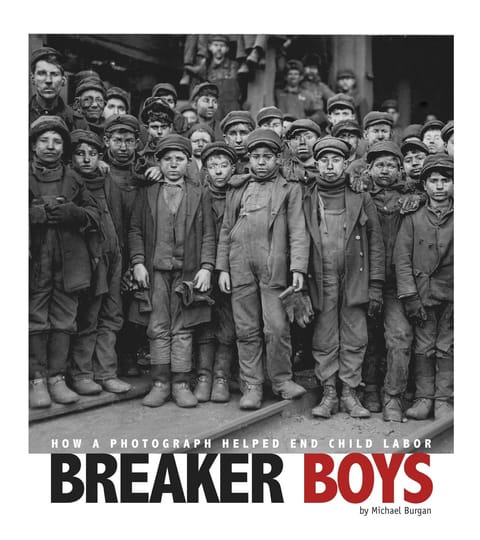
ABOUT THE BOOK
NO SPOILERSBreaker Boys tells the true story of the children who worked in the anthracite coal mines of northeastern Pennsylvania in the late 1800s and early 1900s, sorting jagged chunks of coal by hand while breathing black dust for 10 hours a day, six days a week. At the center of the story is Lewis Hine, an investigative photographer and Progressive reformer who visited the mines around South Pittston, Pennsylvania, in January 1911 and captured images of the breaker boys that millions of Americans would eventually see. The book traces how those photographs, combined with decades of organizing by the National Child Labor Committee, pushed the country toward federal laws that finally ended child labor in the United States.
Free Battle of the Books questions for Breaker Boys: How a Photograph Helped End Child Labor
SPOILERSEvery one of these has the same answer, and that is the point. In a real battle the question is read aloud with a dozen other books in play, and students have a few seconds to place it. Here is what a battle might ask about Breaker Boys: How a Photograph Helped End Child Labor. Use them as a quiz, a trivia round, or BOTB practice.
Where in the book they come from
- Early in the book
In what book do huge coal-processing structures look like enormous preying monsters eating the sunshine?
✓ Answer
Breaker Boys: How a Photograph Helped End Child Labor by Michael Burgan
Writer Stephen Crane described the massive coal-processing buildings in Pennsylvania as structures that 'squatted upon the hillsides and in the valley like enormous preying monsters, eating of the sunshine, the grass, the green leaves.' This vivid, dark image opens the book and sets the tone for the grim world the breaker boys lived in.
- First half
In what book does a photographer buy his first camera in 1903 while working as a science and geography teacher?
✓ Answer
Breaker Boys: How a Photograph Helped End Child Labor by Michael Burgan
Before becoming a famous documentary photographer, Lewis Hine was a teacher in New York City. He bought his first camera in 1903 and quickly saw its potential to reveal truth, teach lessons, and change the world. This realization eventually led him to leave teaching and work full time photographing child laborers.
- First half
In what book does a photographer intentionally use darkness in his images to suggest the grim conditions where children work?
✓ Answer
Breaker Boys: How a Photograph Helped End Child Labor by Michael Burgan
The book explains that Lewis Hine was deliberate about his artistic choices. Inside the coal breaker he used just enough light to capture the shot he wanted, allowing the surrounding darkness to convey the harsh and gloomy conditions the boys worked in. He also added detailed captions to provide information the images alone could not.
- Second half
In what book do judges across the country believe that even children have the right to sign a work contract?
✓ Answer
Breaker Boys: How a Photograph Helped End Child Labor by Michael Burgan
The legal concept of 'liberty of contract' held that the Constitution gave all Americans, including children, the right to enter into work agreements. This belief made it very difficult for reformers to pass stronger child labor laws through the courts.
- Second half
In what book does a new state law require students to stay in school longer after a famous photographer's visit?
✓ Answer
Breaker Boys: How a Photograph Helped End Child Labor by Michael Burgan
After Lewis Hine's 1911 visit to the coal region, Pennsylvania passed laws requiring longer school attendance and limiting children's working hours. The book notes these laws were more strictly enforced than earlier ones.
- Near the end
In what book does an annual award named for a photographer honor people committed to helping youth?
✓ Answer
Breaker Boys: How a Photograph Helped End Child Labor by Michael Burgan
The National Child Labor Committee, which still exists today, gives an annual award named after Lewis Hine. The book mentions this as part of Hine's lasting legacy, honoring individuals who dedicate themselves to improving the lives of young people.